 March 09, 2026 - BY Admin
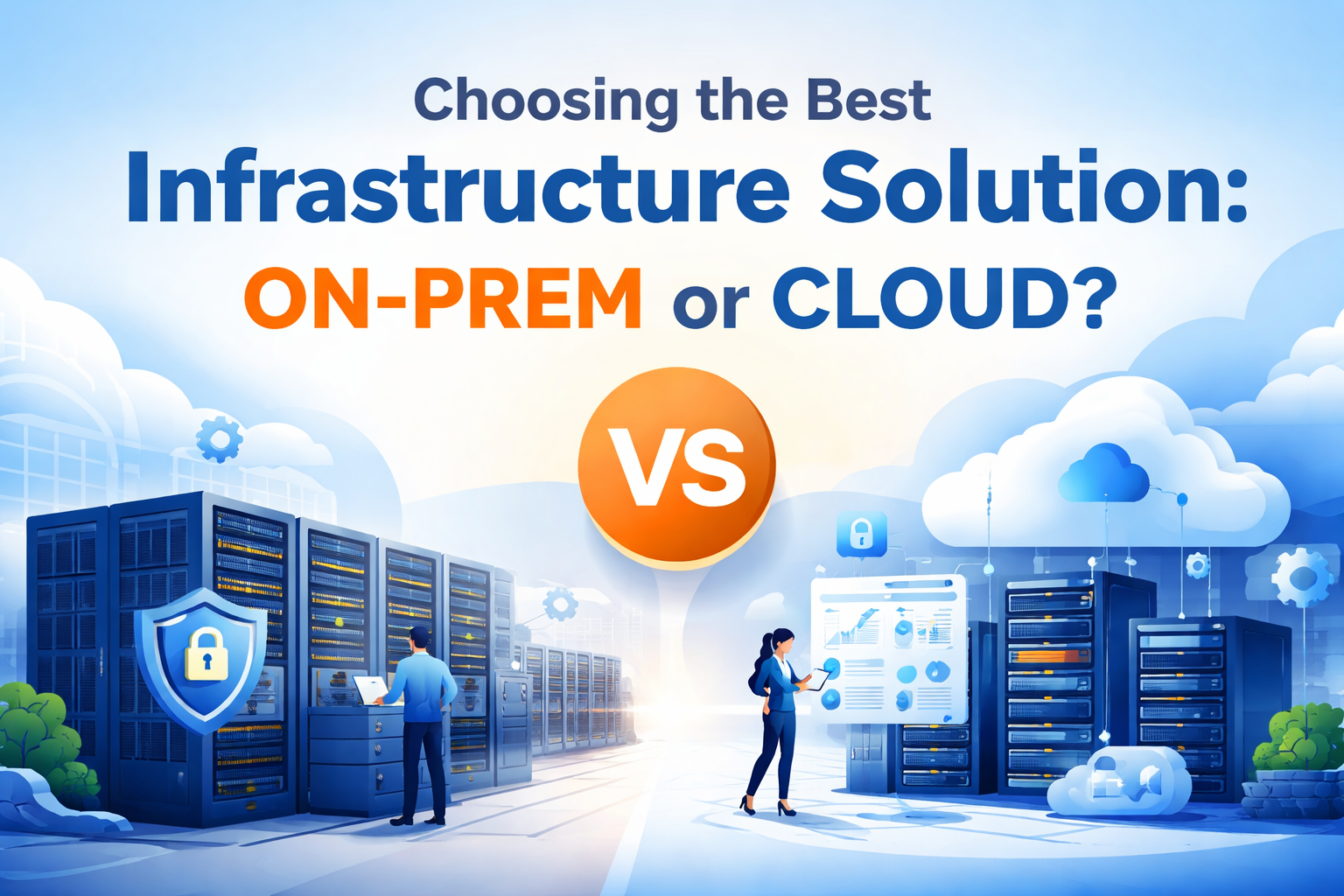
Choosing the Best Infrastructure Solution: On-Prem or Cloud?
In today's fast-paced and ever-evolving technological landscape, businesses are faced with the crucial decision of choosing the best infrastructure solution for their organization. One of the key considerations when making this decision is whether to opt for an on-premise solution or a cloud-based solution. Each option comes with its own set of advantages and disadvantages, and it is important for businesses to carefully weigh these factors before making a decision.
On-Premise Infrastructure:
An on-premise infrastructure solution involves hosting all of your organization's hardware and software on-site, within your own physical premises. This means that you have full control over your infrastructure and can customize it to meet your specific needs. On-premise solutions are often preferred by businesses that have strict security and compliance requirements, as they can ensure that their data is kept secure and confidential. However, on-premise solutions also require a significant upfront investment in terms of hardware, software, and IT staff to manage and maintain the infrastructure.
Cloud-Based Infrastructure:
Cloud-based infrastructure solutions, on the other hand, involve hosting your organization's hardware and software on a third-party provider's servers, which are accessed over the internet. This allows businesses to scale their infrastructure up or down as needed, without the need for a large upfront investment. Cloud-based solutions also offer greater flexibility and agility, as they can be accessed from anywhere with an internet connection. However, businesses that opt for a cloud-based solution must be aware of potential security risks and data privacy concerns, as their data is stored on servers that are not within their direct control.
Factors to Consider:
When choosing between an on-premise or cloud-based infrastructure solution, businesses should consider a number of factors, including cost, security, scalability, and compliance. On-premise solutions may be more cost-effective in the long run, as businesses do not have to pay recurring fees for cloud services. However, cloud-based solutions offer greater scalability and flexibility, allowing businesses to quickly adapt to changing business needs. Security is also a major consideration, as on-premise solutions offer greater control over data security, while cloud-based solutions may be more vulnerable to cyber attacks.
Making the Decision:
Ultimately, the decision between an on-premise or cloud-based infrastructure solution will depend on the specific needs and requirements of your organization. Businesses that require strict security and compliance measures may opt for an on-premise solution, while those looking for greater flexibility and scalability may choose a cloud-based solution. It is important for businesses to carefully evaluate their options and consider the long-term implications of their decision before making a choice. By weighing the advantages and disadvantages of each option, businesses can ensure that they choose the best infrastructure solution for their organization.