 March 06, 2026 - BY Admin
Cloud Migration Made Simple: What to Know Before You Switch
In today’s digital-first world, businesses and individuals are increasingly moving their data, applications, and infrastructure to the cloud. Cloud migration offers flexibility, scalability, and cost efficiency that traditional on-premise systems often struggle to provide. However, moving to the cloud is not simply a matter of copying files from one place to another. A successful migration requires careful planning, the right tools, and a clear understanding of your goals. Before making the switch, it’s important to understand what cloud migration involves and how to prepare for it.
Understanding Cloud Migration
Cloud migration refers to the process of moving digital assets—such as data, applications, databases, and IT processes—from on-premise servers or legacy systems to cloud-based infrastructure. Organizations typically migrate to the cloud to improve performance, reduce infrastructure costs, increase reliability, and support remote work environments. Cloud platforms provide scalable resources that can grow alongside your business needs, making them ideal for companies looking to modernize their IT operations.
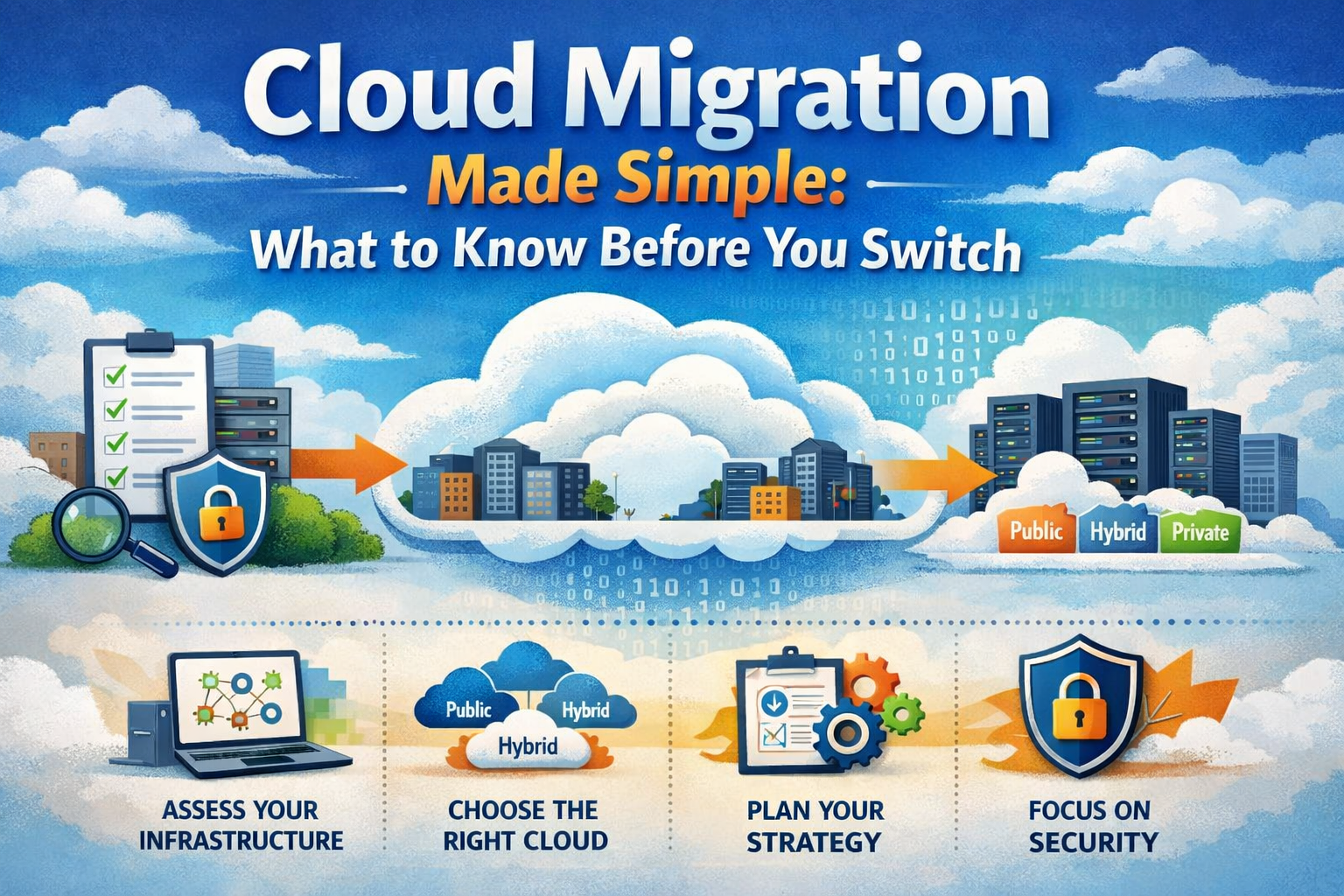
Evaluate Your Current Infrastructure
Before migrating, it’s essential to assess your existing IT environment. This includes identifying the applications you use, understanding how they interact, and determining which workloads are suitable for the cloud. Some legacy applications may require updates or modifications before they can run efficiently in a cloud environment. Conducting a thorough infrastructure assessment helps you avoid compatibility issues and ensures a smoother transition.
Choose the Right Cloud Model
Not all cloud services are the same. Businesses must decide between several deployment models, including public cloud, private cloud, and hybrid cloud. Public cloud services offer cost efficiency and scalability, while private clouds provide greater control and security. Hybrid solutions combine the benefits of both, allowing sensitive data to remain on private infrastructure while other workloads run in the public cloud. Selecting the right model depends on your organization’s security requirements, budget, and operational goals.
Plan Your Migration Strategy
A well-defined migration strategy is key to minimizing downtime and reducing risks. There are several approaches organizations can take, such as rehosting (moving applications without changes), replatforming (making small optimizations), or refactoring (redesigning applications for cloud environments). Each strategy has different cost and complexity levels, so choosing the right approach depends on your long-term objectives and technical capabilities.
Focus on Security and Compliance
Security is a top concern during cloud migration. Sensitive business data must be protected both during transfer and after it is stored in the cloud. Implementing encryption, access controls, and identity management tools can help protect your data. In addition, businesses must ensure they meet regulatory and compliance requirements relevant to their industry, such as data protection standards and privacy laws.
Prepare Your Team
Technology alone does not guarantee a successful migration. Your IT team and employees must be prepared to work with new systems and tools. Training staff on cloud platforms, workflows, and security practices can help reduce errors and improve adoption. Clear communication across departments also ensures everyone understands how the new infrastructure will affect daily operations.
Test Before Full Deployment
Before completing a full-scale migration, organizations should test their systems in the cloud environment. Running pilot programs or migrating smaller workloads first can help identify issues early. Testing ensures applications perform correctly, data integrity is maintained, and security controls as expected.
Monitor and Optimize After Migration
Cloud migration does not end once your systems are moved. Continuous monitoring is necessary to ensure optimal performance, cost efficiency, and security. Businesses should regularly review resource usage, adjust configurations, and optimize workloads to take full advantage of cloud capabilities.
Conclusion
Cloud migration can transform the way organizations manage their technology infrastructure. When planned carefully, it can improve scalability, reduce operational costs, and enhance overall system performance. By evaluating your current infrastructure, choosing the right cloud model, prioritizing security, and preparing your team, you can make the transition smoother and more effective. With the right strategy in place, cloud migration becomes not just a technical upgrade but a strategic step toward future growth and innovation.