 June 01, 2026 - BY Admin
Cyber Security: Protecting the Digital World in an Age of Growing Threats
Introduction
As technology continues to advance, cyber security has become more important than ever. Individuals, businesses, and governments rely heavily on digital systems to store information, communicate, and conduct operations. While these technologies offer convenience and efficiency, they also create opportunities for cybercriminals to exploit vulnerabilities. Cyber security helps protect digital assets and maintain trust in an increasingly connected world.
What Is Cyber Security?
Cyber security refers to the practice of protecting computers, networks, systems, and data from unauthorized access, attacks, and damage. It involves technologies, processes, and best practices designed to safeguard sensitive information and ensure system integrity.
Why Cyber Security Matters
The consequences of cyber attacks can be severe, including financial losses, data breaches, operational disruptions, and reputational damage. Effective cyber security helps organizations and individuals reduce risks while maintaining the confidentiality, integrity, and availability of information.
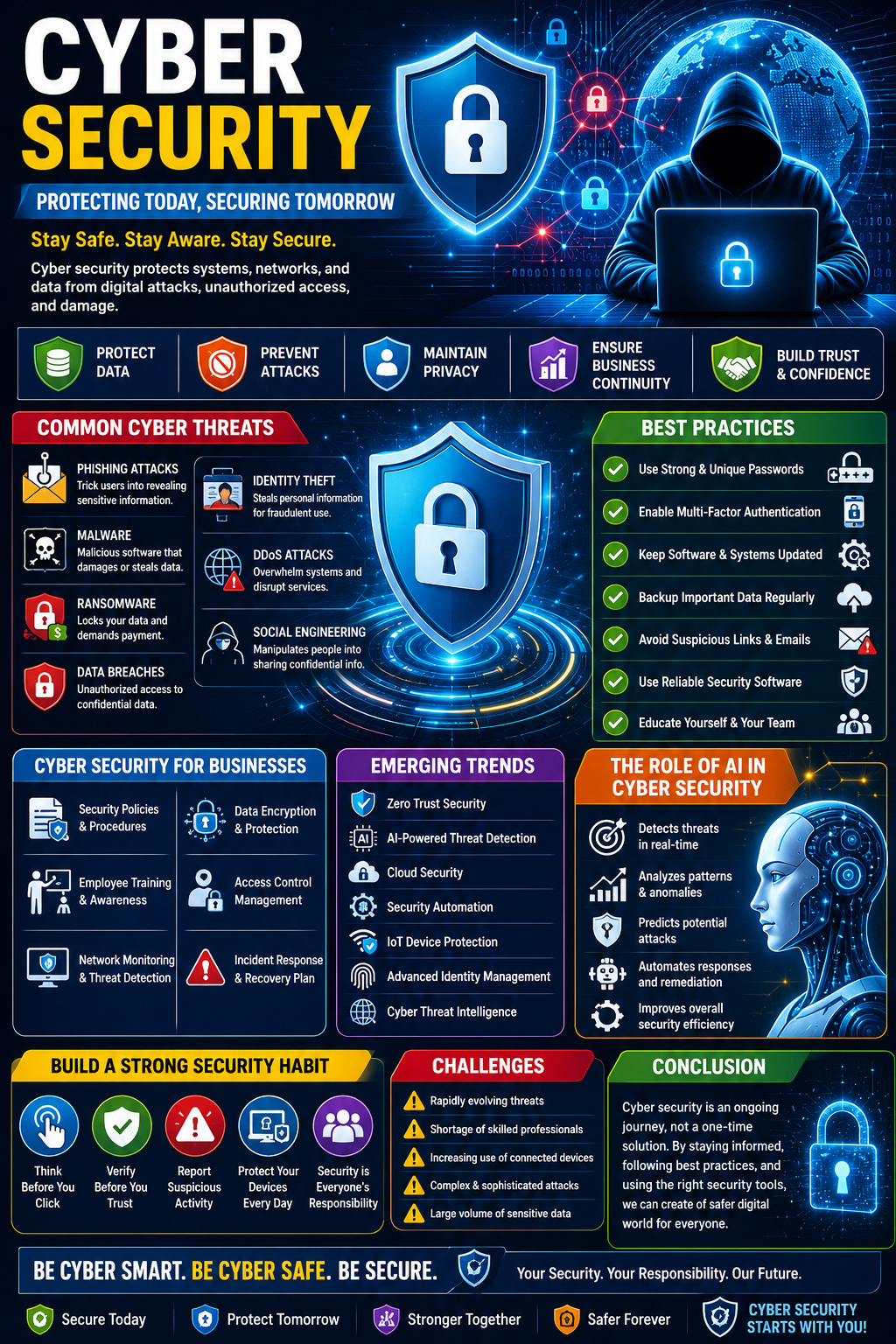
Common Cyber Threats
Organizations and individuals face a variety of cyber threats, including:
- Phishing Attacks – Fraudulent emails or messages designed to steal sensitive information.
- Malware – Malicious software that damages systems or steals data.
- Ransomware – Software that locks data and demands payment for its release.
- Data Breaches – Unauthorized access to confidential information.
- Identity Theft – Criminals using stolen personal information for fraudulent purposes.
- Distributed Denial-of-Service (DDoS) Attacks – Overloading systems to disrupt services.
- Social Engineering – Manipulating people into revealing confidential information.
Essential Cyber Security Practices
Strong cyber security begins with good habits. Important practices include:
- Using strong and unique passwords
- Enabling multi-factor authentication (MFA)
- Regularly updating software and systems
- Backing up important data
- Avoiding suspicious emails and links
- Installing reliable security software
- Educating employees and users about cyber threats
Cyber Security for Businesses
Businesses face growing cyber risks as they store large amounts of customer and operational data. A comprehensive cyber security strategy should include:
- Security policies and procedures
- Employee awareness training
- Network monitoring and threat detection
- Data encryption
- Access control management
- Incident response planning
- Regular security assessments
The Role of Artificial Intelligence in Cyber Security
Artificial Intelligence (AI) is transforming cyber security by helping organizations detect threats faster and respond more effectively. AI-powered systems can analyze large volumes of data, identify unusual behavior, and automate threat detection processes.
Challenges in Cyber Security
Despite advancements in security technologies, cyber security remains a complex challenge due to:
- Rapidly evolving cyber threats
- Increasing use of connected devices
- Shortage of cyber security professionals
- Sophisticated attack techniques
- Growing volume of sensitive digital data
Emerging Trends in Cyber Security
Several trends are shaping the future of cyber security:
- Zero Trust Security Models
- AI-Powered Threat Detection
- Cloud Security Solutions
- Security Automation
- Internet of Things (IoT) Protection
- Advanced Identity Management
- Cyber Threat Intelligence
The Future of Cyber Security
As digital transformation continues, cyber security will remain a top priority for organizations worldwide. Investments in advanced technologies, employee training, and proactive security strategies will help combat increasingly sophisticated cyber threats.
Conclusion
Cyber security is no longer optional—it is a necessity. Protecting digital assets, sensitive information, and critical systems requires a combination of technology, awareness, and continuous improvement. By adopting strong cyber security practices, individuals and organizations can reduce risks and build a safer digital future.