 June 29, 2026 - BY Admin
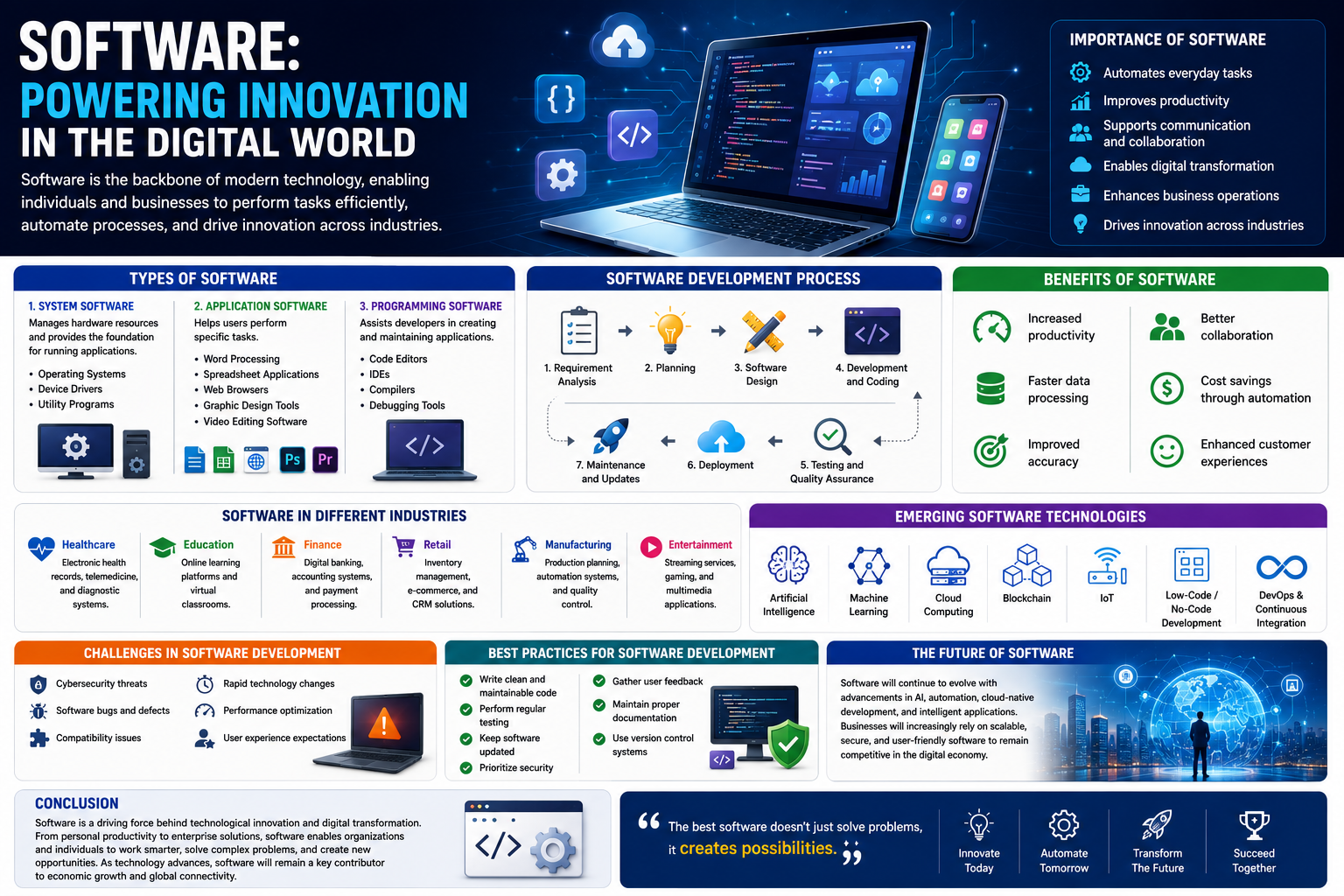
Powering Innovation in the Digital World
Introduction
Software has become an essential part of everyday life, powering everything from smartphones and computers to cloud services and enterprise applications. Whether managing finances, communicating with others, or running complex business operations, software enables users to accomplish tasks quickly and efficiently. As technology continues to evolve, software remains at the center of digital transformation and innovation.
What Is Software?
Software is a collection of programs, instructions, and data that tell a computer or digital device how to perform specific tasks. Unlike hardware, which refers to physical components, software provides the functionality that makes devices useful.
Importance of Software
Software plays a critical role by:
- Automating everyday tasks
- Improving productivity and efficiency
- Supporting communication and collaboration
- Enabling digital transformation
- Enhancing business operations
- Driving innovation across industries
Types of Software
1. System Software
System software manages hardware resources and provides the foundation for running applications.
Examples include:
- Operating Systems
- Device Drivers
- Utility Programs
2. Application Software
Application software helps users perform specific tasks.
Examples include:
- Word Processing Software
- Spreadsheet Applications
- Web Browsers
- Graphic Design Tools
- Video Editing Software
3. Programming Software
Programming software assists developers in creating and maintaining applications.
Examples include:
- Code Editors
- Integrated Development Environments (IDEs)
- Compilers
- Debugging Tools
Software Development Process
Creating high-quality software involves several stages:
- Requirement Analysis
- Planning
- Software Design
- Development and Coding
- Testing and Quality Assurance
- Deployment
- Maintenance and Updates
Following a structured development process helps ensure reliability and performance.
Benefits of Software
Software offers numerous advantages, including:
- Increased productivity
- Faster data processing
- Improved accuracy
- Better collaboration
- Cost savings through automation
- Enhanced customer experiences
Software in Different Industries
Software supports innovation across many sectors:
- Healthcare: Electronic health records, telemedicine, and diagnostic systems.
- Education: Online learning platforms and virtual classrooms.
- Finance: Digital banking, accounting systems, and payment processing.
- Retail: Inventory management, e-commerce, and customer relationship management.
- Manufacturing: Production planning and automation systems.
- Entertainment: Streaming services, gaming, and multimedia applications.
Emerging Software Technologies
Several technologies are shaping the future of software:
- Artificial Intelligence (AI)
- Machine Learning
- Cloud Computing
- Blockchain
- Internet of Things (IoT)
- Low-Code and No-Code Development
- DevOps and Continuous Integration
Challenges in Software Development
Software developers and organizations often face challenges such as:
- Cybersecurity threats
- Software bugs and defects
- Compatibility issues
- Rapid technology changes
- Performance optimization
- User experience expectations
Best Practices for Software Development
Successful software projects often follow these practices:
- Write clean and maintainable code
- Perform regular testing
- Keep software updated
- Prioritize security
- Gather user feedback
- Maintain proper documentation
- Use version control systems
The Future of Software
Software will continue to evolve with advancements in AI, automation, cloud-native development, and intelligent applications. Businesses will increasingly rely on scalable, secure, and user-friendly software to remain competitive in the digital economy.
Conclusion
Software is a driving force behind technological innovation and digital transformation. From personal productivity to enterprise solutions, software enables organizations and individuals to work smarter, solve complex problems, and create new opportunities. As technology advances, software will remain a key contributor to economic growth and global connectivity.