 February 20, 2026 - BY Admin
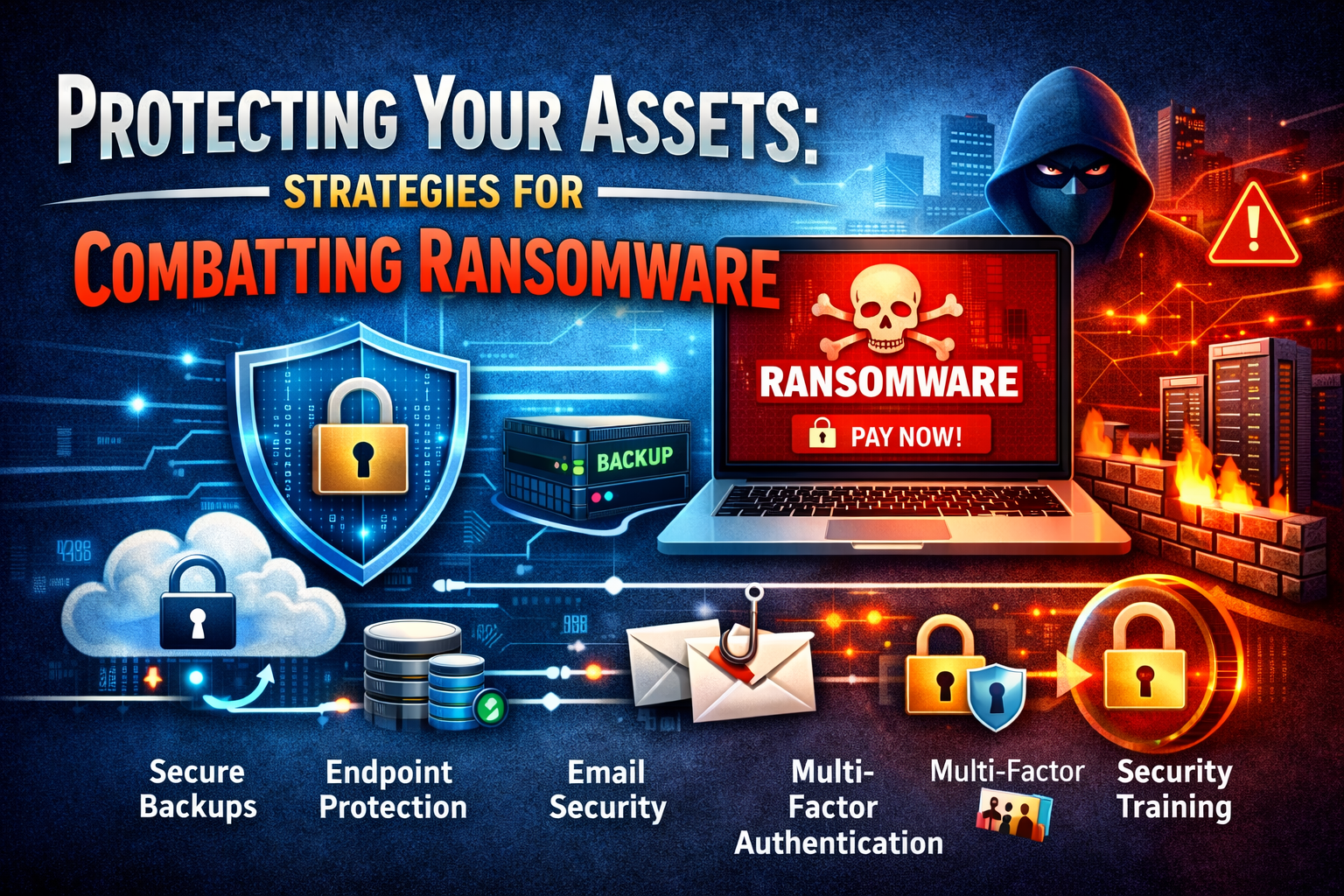
Protecting Your Assets: Strategies for Combatting Ransomware
In today's digital age, ransomware has become a major threat to businesses of all sizes. Ransomware is a type of malware that encrypts a victim's files and demands payment in exchange for the decryption key. This can result in significant financial losses, as well as damage to a company's reputation. In order to protect your organization from ransomware attacks, it is crucial to implement a strong cybersecurity strategy.
Here are some key strategies to combat ransomware:
What Is Ransomware? : Ransomware is a type of malware that encrypts a victim's files and demands payment in exchange for the decryption key. This can result in significant financial losses, as well as damage to a company's reputation. Ransomware attacks can be delivered through various means, such as malicious email attachments, compromised websites, or exploit kits. Once a system is infected, the ransomware will encrypt files on the victim's computer or network, making them inaccessible until a ransom is paid.
The Real Cost of Ransomware: The cost of a ransomware attack goes beyond the ransom payment itself. In addition to the financial losses associated with paying the ransom, businesses may also incur costs related to downtime, data recovery, and reputational damage. According to a report by Cybersecurity Ventures, global ransomware damage costs are predicted to reach $20 billion by 2021. This highlights the importance of implementing strong cybersecurity measures to protect against ransomware attacks.
Key Strategies to Combat Ransomware
1. Implement a Strong Backup Strategy: Regularly back up your data and store it in a secure location. This will allow you to restore your files in the event of a ransomware attack.
2. Keep Systems Updated: Ensure that all software and operating systems are up to date with the latest security patches. This will help protect against known vulnerabilities that ransomware may exploit.
3. Deploy Advanced Endpoint Protection: Use endpoint security solutions that can detect and block ransomware threats before they can infect your systems.
4. Strengthen Email Security: Implement email filtering and authentication measures to prevent malicious emails from reaching your employees' inboxes.
5. Enforce Multi-Factor Authentication (MFA): Require employees to use MFA to access sensitive systems and data. This adds an extra layer of security in case passwords are compromised.
6. Apply the Principle of Least Privilege: Limit user access to only the resources and data they need to perform their job functions. This can help prevent ransomware from spreading throughout your network.
7. Conduct Regular Security Awareness Training: Educate employees about the risks of ransomware and how to identify potential threats. This can help prevent them from falling victim to phishing scams or other social engineering tactics used by cybercriminals.
8. Segment Your Network: Divide your network into separate segments to contain the spread of ransomware in case of an infection. This can help minimize the impact of a ransomware attack on your organization.
9. Develop an Incident Response Plan: Create a plan that outlines the steps to take in the event of a ransomware attack. This should include procedures for containing the infection, restoring data from backups, and communicating with stakeholders.
10. Consider Managed Security Services: Partner with a managed security services provider to enhance your organization's cybersecurity defenses. They can help monitor for ransomware threats, respond to incidents, and provide ongoing security support.
What To Do If You’re Attacked
If your organization falls victim to a ransomware attack, it is important to remain calm and follow your incident response plan. Do not pay the ransom, as there is no guarantee that the cybercriminals will provide the decryption key. Instead, report the incident to law enforcement and seek assistance from cybersecurity experts to help recover your data and secure your systems.
Final Thoughts
Ransomware attacks continue to pose a serious threat to businesses around the world. By implementing strong cybersecurity measures and following best practices, organizations can better protect themselves against ransomware threats. It is important to stay vigilant, keep systems updated, and educate employees about the risks of ransomware. By taking proactive steps to combat ransomware, businesses can reduce the likelihood of falling victim to these costly and damaging attacks.