 September 28, 2026 - BY Admin
The Importance of Effective Communication in Everyday Life and Business
Understanding Communication
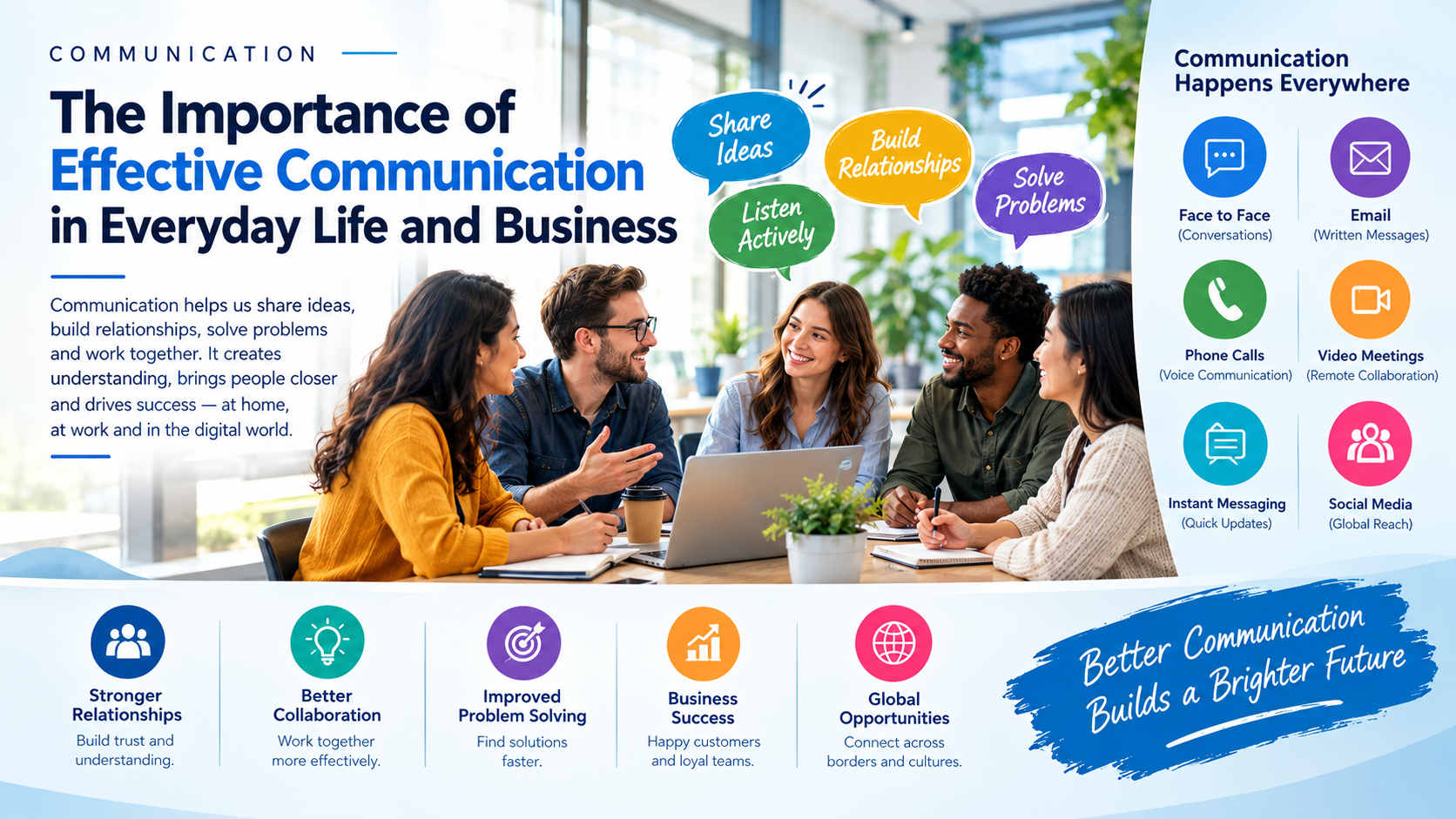
Communication is the process of exchanging information, ideas, thoughts, and feelings between people. It can happen through spoken words, written messages, body language, facial expressions, emails, phone calls, video meetings, and digital platforms.
The Importance of Clear Communication
Clear communication helps people understand information correctly and reduces confusion. Whether someone is giving instructions, discussing a project, or explaining a problem, using simple and organized language can make the message easier to understand.
Communication in the Workplace
Effective workplace communication helps employees collaborate and complete tasks efficiently. Team meetings, emails, messaging platforms, project-management tools, and video conferences allow employees to share updates, discuss challenges, and coordinate their work.
Listening Is an Important Skill
Good communication is not only about speaking. Listening carefully is equally important. Active listening helps people understand different viewpoints, identify concerns, and respond appropriately. Asking questions and avoiding unnecessary interruptions can make conversations more productive.
Digital Communication
Technology has transformed the way people communicate. Email, instant messaging, social media, video conferencing, and collaboration platforms allow people to communicate across cities and countries. However, digital messages should still be clear, respectful, and appropriate for the situation.
Communication and Customer Service
Businesses depend on effective communication to understand and support their customers. Clear product information, helpful responses, professional emails, and timely updates can improve the customer experience and help build long-term relationships.
Nonverbal Communication
Communication also happens without words. Facial expressions, gestures, posture, eye contact, and tone of voice can influence how a message is understood. Paying attention to these signals can help people communicate more effectively.
Communication and Problem Solving
Many problems can be resolved more easily through open and respectful communication. Discussing issues, sharing information, asking questions, and listening to different perspectives can help teams identify solutions and avoid unnecessary misunderstandings.
Cross-Cultural Communication
People from different cultures may have different communication styles, expressions, and expectations. Being respectful of cultural differences and avoiding assumptions can help create better relationships in international workplaces and diverse communities.
Improving Communication Skills
Communication skills can be developed through regular practice. Speaking clearly, listening actively, writing carefully, asking relevant questions, choosing the right communication method, and considering the audience can all improve the quality of communication.
The Future of Communication
Communication will continue to evolve as technology develops. Artificial intelligence, real-time translation, virtual meetings, collaboration platforms, and other digital tools are creating new ways for people to connect. Human understanding, empathy, and clear communication will remain important alongside these technologies.
Conclusion
Effective communication plays an important role in personal relationships, education, workplaces, and business. By communicating clearly, listening carefully, respecting different perspectives, and using technology responsibly, people can build stronger relationships and work together more successfully.